Silk Co-Ord Set vs 3-Piece Formal Suit: What Should You Wear?
Choosing between a silk co-ord set and a three-piece formal suit is not simply a question of which outfit looks more elegant. The better choice depends on the event, venue, time of day, your role at the occasion and how dressed up you actually need to be.
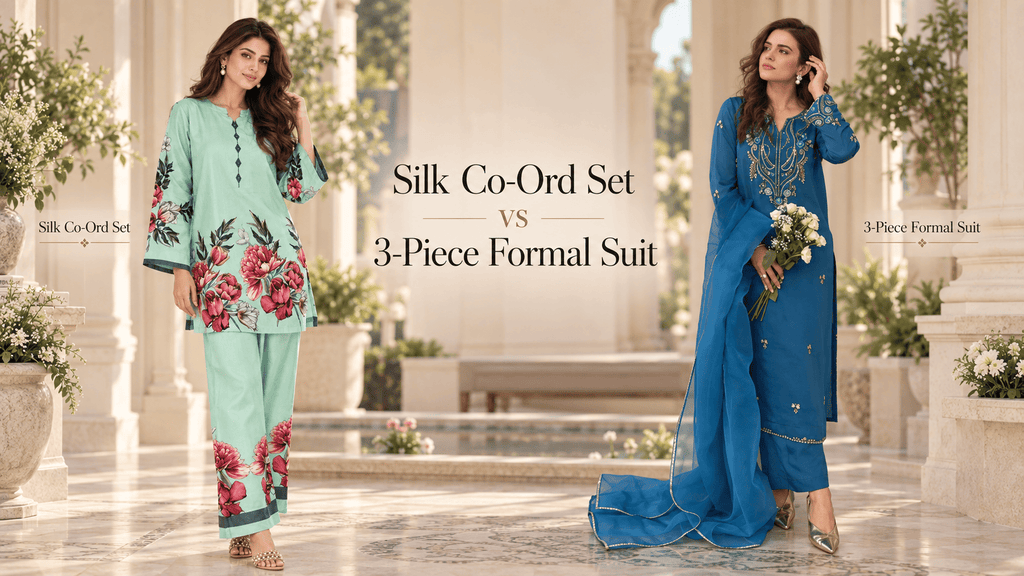
A silk co-ord can give you a clean, coordinated and polished look without the additional layers of traditional formalwear. A three-piece suit usually brings a stronger occasion-wear direction because the shirt, trousers and dupatta work together as a complete Pakistani formal outfit. Neither option is automatically better, and neither should be chosen only because of the number of pieces.
This guide compares both styles from a practical buying perspective so you can decide what makes more sense for dinners, Eid gatherings, engagements, wedding events and other semi-formal occasions in Pakistan.
Silk Co-Ord vs 3-Piece Formal Suit: The Quick Answer
If the event calls for a polished but relatively uncomplicated look, a silk co-ord is often the easier direction. It gives you a coordinated two-piece outfit that can be styled with jewellery, heels or a structured bag without requiring a dupatta or heavy embellishment.
A three-piece formal suit becomes more useful when the occasion feels more traditional, festive or ceremonial. The additional dupatta and formal detailing can make the outfit feel more complete for wedding-related gatherings, family celebrations and events where traditional Pakistani dressing is expected.
| Consideration | Silk Co-Ord Set | 3-Piece Formal Suit |
|---|---|---|
| Typical Structure | Coordinated shirt and trousers | Shirt, trousers and dupatta |
| Overall Direction | Contemporary, clean and coordinated | Traditional, layered and occasion focused |
| Useful For | Dinners, Eid gatherings and lighter semi-formal events | Wedding events, engagements and dressier celebrations |
| Styling | Usually needs fewer additional elements | Allows more dupatta and jewellery styling |
| Rewear Potential | Can be easier to restyle for different gatherings | Often purchased for more occasion-specific use |
The table should be treated as a buying guide rather than a fixed dress code. A heavily detailed two-piece can look more formal than a very simple three-piece suit, so the fabric, cut, embellishment and complete styling still matter.
What Makes an Outfit Semi-Formal in Pakistan?
Semi-formal is not one fixed outfit category in Pakistani fashion. The level of dressing expected at a restaurant dinner can be very different from an engagement at home, even though both may be described casually as semi-formal events.
The most useful way to judge the dress code is to consider the venue, time of day and your relationship to the hosts. A daytime family lunch usually allows a lighter approach, while an evening engagement or wedding-related dinner may call for richer fabric, more considered accessories or a dupatta.
Your role also matters. A close family member may reasonably dress more formally than a guest attending the same event. This is why choosing an outfit according to the occasion itself is more reliable than following one general rule about silk, co-ords or three-piece suits.
What Is a Silk Co-Ord Set?
A silk co-ord set is a coordinated outfit in which the top and trousers are designed to work together. The colour, print or design language usually connects both pieces, which makes the outfit easier to style without having to build a look from separate garments.
Silk or a silk-based option can give the coordinated silhouette a more polished appearance than a very casual fabric. Printed silk co-ords are particularly useful when you want visual interest from the garment itself rather than depending on embroidery, a heavy dupatta or multiple accessories.
Mahnoor Azher’s silk dresses for women collection includes two-piece silk outfits and printed co-ord directions for shoppers who want a contemporary alternative to heavier formalwear.
What Is a 3-Piece Formal Suit?
A three-piece Pakistani suit generally brings together a shirt, trousers and a coordinating dupatta. The additional third piece gives the outfit more layering and styling possibilities, particularly when the dupatta introduces contrast, embellishment, texture or decorative finishing.
Three-piece outfits can range from relatively understated designs to highly detailed formalwear, so the number of pieces alone does not determine formality. However, the addition of a dupatta often makes the complete look feel more traditional and naturally suited to wedding-related or festive occasions.
Mahnoor Azher’s formal dresses for women collection includes semi-formal pret as well as embellished three-piece formal suits for women who want a stronger occasion-wear direction.
Which Is Better for a Semi-Formal Event?
A silk co-ord is often the more practical choice when the event sits toward the relaxed end of semi-formal dressing. This could include an evening dinner, a family celebration, a restaurant gathering or an occasion where you want to look refined without appearing heavily dressed.
A three-piece formal suit becomes more appropriate as the event moves closer to traditional or festive dressing. An engagement dinner, wedding-related gathering or formal family function may benefit from the extra styling presence created by the dupatta and more detailed construction.
The most useful decision is therefore not whether a co-ord or three-piece suit is universally more appropriate. Decide how much visual formality the specific event requires, then choose the silhouette that reaches that level without feeling underdressed or unnecessarily elaborate.
When a Silk Co-Ord Set Makes More Sense
A silk co-ord works particularly well for women who prefer a clean, contemporary silhouette. Because the shirt and trousers already coordinate, the complete outfit can look intentional without requiring several additional layers or accessories.
This makes the style useful for dinners, smaller family functions, Eid visits, evening gatherings and occasions where heavily embellished formalwear would feel excessive. The fabric and print can provide enough visual presence while jewellery and footwear are used to control how dressed up the final look becomes.
A printed silk co-ord can also be practical when you want an outfit that does not depend on a dupatta. For women who prefer easier movement during longer events or simply favour a simpler styling routine, that can be an important consideration rather than only an aesthetic preference.
When a 3-Piece Formal Suit Makes More Sense
A three-piece suit is the stronger direction when the event has a more traditional or ceremonial character. The dupatta becomes part of the visual structure of the outfit and can make even restrained tailoring feel more connected to Pakistani occasion wear.
This can make three-piece formalwear particularly suitable for engagements, Nikkah-related gatherings, wedding dinners, Eid occasions and formal family events. The exact suitability still depends on the design, because a minimal three-piece and a heavily embellished formal suit will create very different levels of impact.
If you already know that the event will involve formal photography, close family participation or a traditional dress expectation, the additional styling possibilities of a three-piece outfit may also make it easier to create a look that feels occasion appropriate.
Does a Silk Co-Ord Look Formal Enough?
A silk co-ord can look sufficiently polished for many semi-formal events without being heavily embellished. Formality is created by the complete outfit, including fabric, tailoring, print, footwear, jewellery and bag, rather than by embroidery alone.
A darker or more refined print paired with heels and understated statement jewellery can move a co-ord toward evening dressing. A softer floral design with simple footwear and minimal accessories may instead feel more appropriate for a daytime gathering.
This flexibility is one of the strongest reasons to consider silk co-ords for a wardrobe that needs to cover several different social occasions rather than one specific event.
Is a 3-Piece Suit Always More Formal?
No. A three-piece structure gives the outfit additional layers, but it does not automatically make every design more formal than every two-piece outfit.
A minimally detailed three-piece suit can feel restrained, while a highly polished silk co-ord with strong tailoring and occasion-focused styling may have greater visual impact. The better comparison is between the actual garments rather than the number of components.
When shopping online, look closely at the surface detailing, fabric, colour, silhouette and dupatta rather than relying only on labels such as “formal,” “pret” or “co-ord.”
Why the Dupatta Changes the Look
The dupatta is one of the clearest differences between a typical co-ord and a traditional three-piece suit. It introduces another layer that can alter the colour balance, movement and overall formality of the outfit.
A detailed or contrasting dupatta can become the main decorative element even when the shirt itself is relatively simple. It can also make an outfit feel more appropriate for occasions where traditional Pakistani styling is expected.
By comparison, a silk co-ord keeps attention on the shirt-and-trouser combination. This creates a cleaner visual line and often makes the outfit easier to style with contemporary accessories.
Which Option Is Easier to Style?
A silk co-ord generally requires fewer styling decisions because the main pieces already match. Once the outfit is selected, the remaining choices are usually jewellery, footwear and a bag, which makes it easier to put together a polished look quickly.
A three-piece suit needs slightly more consideration because the dupatta becomes another important visual element. Jewellery, footwear and bag choices need to work with both the main outfit and the dupatta rather than competing with them.
That additional complexity is not necessarily a disadvantage. If you enjoy layered traditional styling, a three-piece suit gives you more opportunities to create a distinctive occasion look.
Which Outfit Is Easier to Rewear?
A silk co-ord can offer strong rewear potential because the complete set can be styled differently simply by changing accessories. Depending on the design, the shirt or trousers may also work separately with other pieces already in your wardrobe.
A three-piece formal suit may be more closely tied to special events when it contains prominent embellishment, statement detailing or a highly decorative dupatta. However, a more restrained three-piece can also be restyled by changing how the dupatta and accessories are used.
Before purchasing either option, consider how many realistic occasions you can already imagine wearing it to. An outfit that suits your actual social calendar generally provides better wardrobe value than one chosen only because it appears more formal.
Mahnoor Azher Silk Co-Ord Examples
Looking at real designs makes the comparison easier because fabric, print and construction can be evaluated together rather than in theory.
Pastel Paisley Co-Ord Set
The Pastel Paisley Co-Ord Set is a two-piece shirt and trouser design offered with a silk option. Its decorative print and coordinated silhouette make it an example of a lighter, polished outfit that can move between casual and smart-casual styling depending on the chosen fabric and accessories.
For a semi-formal dinner, the silk option can be paired with refined footwear and jewellery rather than trying to make the outfit appear heavier through excessive accessories.
Midnight Garden Co-Ord Set
The Midnight Garden Co-Ord Set uses a stronger combination of floral and architectural print elements. A visually active print like this can give the outfit enough character that the rest of the styling can remain relatively controlled.
This kind of design can make sense for a woman who wants something more noticeable than a quiet daytime co-ord but does not necessarily want an embroidered three-piece formal outfit.
A 3-Piece Formal Example: MultiStones
The MultiStones 3 Piece provides a useful contrast because it is constructed as a full three-piece formal outfit rather than a coordinated two-piece set.
The product is made from pure raw silk and includes a tailored shirt, matching pants and a coordinating dupatta. That structure makes it a more natural option when you want a clearly formal Pakistani silhouette with the dupatta functioning as part of the complete design.
This does not mean it should replace a silk co-ord for every event. It simply serves a different purpose. A shopper choosing for a formal family gathering may value the three-piece structure, while someone shopping for several dinners and lighter occasions may get more use from a versatile co-ord.
What Should You Wear to a Dinner?
For a restaurant dinner, family dinner or smaller evening gathering, a silk co-ord will often provide enough polish without making the outfit feel unnecessarily ceremonial.
If the print already has strong visual detail, choose one noticeable accessory rather than several competing elements. Earrings with a structured bag or polished footwear can be enough to complete the look.
A three-piece suit may make more sense when the dinner is attached to an engagement, wedding event or another celebration where guests are expected to dress more traditionally.
What Should You Wear to an Engagement?
An engagement can vary significantly in formality, so the venue and your relationship to the couple matter. A guest attending an intimate daytime engagement may be comfortable in a polished silk co-ord, particularly when the colour and styling feel occasion appropriate.
For close family members or evening engagements at more formal venues, a three-piece suit can provide a stronger visual presence. The dupatta and additional detailing allow the outfit to feel more connected to traditional celebration dressing without moving directly into bridal-level formality.
What Should You Wear for Eid?
Both outfit types can work well for Eid because the day often includes several different settings, from family visits to dinners and larger gatherings.
A silk co-ord can be practical when you want a polished outfit that remains easy to wear throughout the day. A three-piece suit may suit someone who prefers a more traditional festive look or wants the dupatta to play a central role in the styling.
Choose according to your actual plans rather than assuming Eid requires one specific level of formality.
What Should You Wear to a Wedding Event?
The answer depends heavily on which wedding event you are attending. A smaller daytime gathering or intimate pre-wedding occasion may allow a refined silk co-ord, especially for guests who prefer a contemporary approach.
An engagement dinner, Nikkah gathering or more traditional evening event may be better suited to a three-piece formal suit, particularly when the dress code is clearly festive. For highly formal wedding functions, you may want a more embellished formal outfit depending on the venue and your relationship to the hosts.
Instead of treating every wedding-related event the same way, judge each one according to its setting and expected level of dressing.
What Should You Wear to a Work Dinner?
A silk co-ord is usually the more adaptable direction for professional dinners because it can look coordinated and refined without appearing overly ceremonial.
Choose a print, colour and silhouette that feel polished rather than highly festive, then keep the accessories controlled. A very embellished three-piece suit may feel excessive unless the work event has a cultural or specifically formal dress requirement.
How to Style a Silk Co-Ord for a Semi-Formal Event
Start with the fabric and print rather than the accessories. If the outfit already contains a strong floral, paisley or artistic design, let that visual detail carry most of the look and choose jewellery accordingly.
A structured handbag, refined heels or a noticeable pair of earrings can provide enough contrast without overwhelming the coordinated silhouette. When the design is more understated, you have greater freedom to introduce stronger accessories.
The aim should be to make the outfit feel deliberately polished rather than attempting to turn a co-ord into a heavily formal suit through excessive styling.
How to Style a 3-Piece Formal Suit
A three-piece formal outfit already contains more visual components, so balance is especially important. If the dupatta contains strong detail, the jewellery can remain restrained. If the shirt and dupatta are both relatively simple, a more noticeable pair of earrings or a formal bag can become the focal point.
Try to avoid making every element compete for attention at once. A detailed shirt, heavy dupatta, statement necklace, large earrings and embellished footwear can easily make the complete look feel crowded.
Strong formal styling usually works best when one or two elements lead and the remaining details support them.
What to Check Before Buying Online
Online shopping should begin with the product information rather than the main photograph. For a silk co-ord, check the exact fabric, shirt and trouser measurements, available sizing, included pieces and any care information provided on the product page.
For a three-piece formal suit, also check the dupatta fabric, decorative detailing and whether all three pieces shown are included. Formal outfits can vary significantly in construction, so do not assume that similar photographs mean the garments have the same fabric or finish.
Measurements are particularly important for structured outfits. Compare the provided size chart with your own measurements instead of relying only on the size label you usually purchase.
Silk Co-Ord or 3-Piece Suit: Which Gives Better Value?
Value should be judged by use rather than simply price. A silk co-ord may offer greater practical value when you attend several dinners, Eid gatherings and lighter semi-formal occasions because the outfit can potentially be restyled repeatedly.
A three-piece formal suit may provide better value when your wardrobe lacks a dependable option for engagements, wedding events and traditional celebrations. In that case, buying something more occasion focused solves a genuine wardrobe gap.
The stronger purchase is the outfit that fits the events you actually attend rather than the one that appears more versatile or more luxurious in isolation.
Silk Co-Ord vs 3-Piece Formal Suit: Final Decision
Choose a silk co-ord when you want a contemporary two-piece silhouette, prefer simpler styling and expect to wear the outfit across dinners, Eid gatherings or lighter semi-formal events. It is also a strong option when you prefer the fabric and print to provide most of the visual interest.
Choose a three-piece formal suit when the occasion is more traditional, the dupatta is an important part of your preferred look, or the event calls for a clearly formal Pakistani silhouette. Weddings, engagements and festive evening gatherings are situations where this direction can make more sense.
Neither option should be treated as the permanent winner. A useful wardrobe has room for different levels of formality, and the strongest buying decision is the one that matches the event rather than following a general fashion rule.
Frequently Asked Questions
Can I wear a silk co-ord to a semi-formal event?
Yes. A polished silk co-ord can work well for dinners, family gatherings and selected semi-formal occasions when the print, cut and accessories suit the event. The venue and expected dress code should still guide the final styling.
Is a 3-piece suit more formal than a co-ord set?
A three-piece suit often has a more traditional and layered appearance because it includes a dupatta, but it is not automatically more formal in every case. The fabric, embellishment and overall construction of the actual garments matter more than the number of pieces alone.
Can I wear a silk co-ord to a wedding?
A silk co-ord can work for selected smaller wedding-related gatherings, particularly when you are attending as a guest and the occasion is relatively intimate. For more traditional or formal wedding events, a three-piece or more embellished formal outfit may be more appropriate.
Which outfit is easier to wear again?
A silk co-ord can be particularly easy to restyle because accessories can change the character of the complete outfit and, depending on the design, the individual pieces may also work separately. A restrained three-piece suit can also be reworn, especially when the dupatta and jewellery are styled differently.
Do I need a dupatta for a semi-formal event?
No. A dupatta is an important part of many traditional Pakistani outfits, but it is not required for every semi-formal occasion. A well-designed coordinated two-piece can create a complete look when the event and dress code allow a more contemporary silhouette.
Which outfit should I choose for an Eid dinner?
Both can work. A silk co-ord suits women who want a cleaner contemporary look, while a three-piece formal suit suits those who prefer a more traditional and layered festive appearance. Choose according to the setting and how dressed up the gathering is expected to be.
What should I check before ordering either outfit online?
Review the fabric, included pieces, size chart, garment measurements, product photography and care information. For a three-piece suit, also confirm the dupatta details so you understand exactly what is included before placing the order.
Final Thoughts
A silk co-ord and a three-piece formal suit should not be treated as competing versions of exactly the same outfit. They serve different levels of occasion dressing and different styling preferences.
The silk co-ord offers a cleaner route to a polished contemporary look, while the three-piece formal suit gives you more layering, a dupatta and a stronger connection to traditional occasion wear. Understanding that distinction makes it much easier to choose according to the event rather than simply following what appears more formal.
For contemporary silk two-piece outfits, explore Mahnoor Azher’s silk collection. For more traditional and occasion-focused dressing, the formal collection provides three-piece and embellished options designed for events where a stronger formal presence is appropriate.